

Blog Post
A journey through the soils of southern Spain:
First insights from the FENIX Project
Before any innovation can take root, we must first understand the ground it will grow in. That idea has guided the FENIX project from the beginning. In an earlier blog, we explained how soil characterisation works and why it is essential for developing a sustainable soil improver based on biochar and digestate.
Now that the first phase of analyses is completed, we can share what we have learned about the soils of southern Spain, north-central France and northern Greece. This blog focuses on the findings from southern Spain — three contrasting environments shaped by climate, land use, and history. These results provide the scientific baseline needed to assess how the soil improver performs over time.
Three landscapes, three soil realities
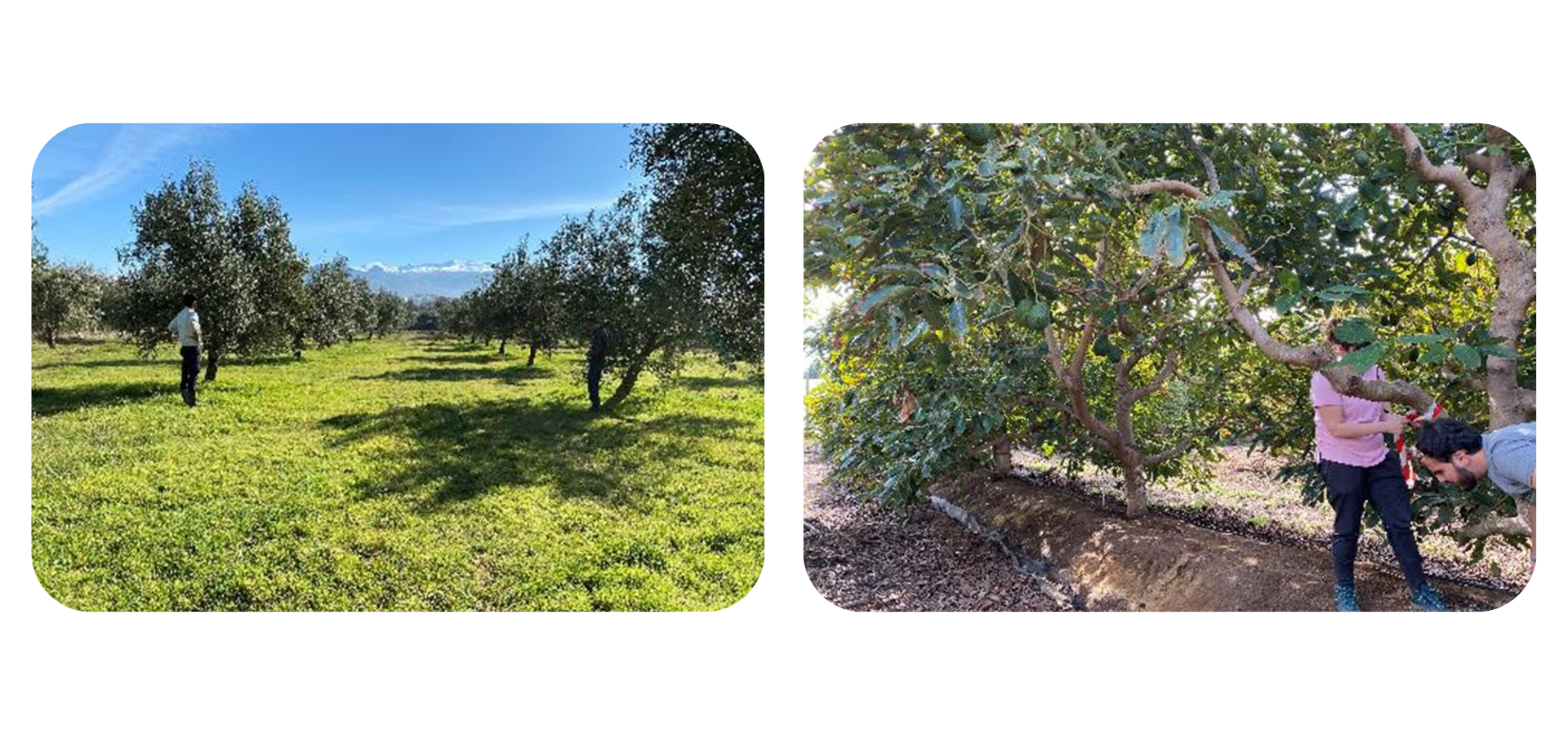
The work in Spain focuses on three agricultural settings in Granada that represent the diversity of Mediterranean soils in the south of the country:
- An organic olive grove in Gójar, where continuous vegetation cover supports soil structure and organic matter.
- An irrigated avocado plantation in Motril, influenced by subtropical Mediterranean conditions and regular organic inputs.
- An abandoned cereal field in the Altiplano de Guadix-Baza, a semi-arid plateau where years of cultivation followed by abandonment have left the soil depleted and compacted.
Although geographically close, these soils differ profoundly in their physical, chemical, and biological characteristics — and these differences will shape how each respond to the soil improver.
What the soil told us
Texture and structure: the physical framework
All three soils fall within the loamy texture range, but their internal structure varies considerably.
- The avocado plantation soil is the sandiest and has the lowest bulk density, meaning it is naturally more porous and easier for roots to explore.
- The olive grove soil is denser but benefits from the stabilising effect of vegetation cover.
- The abandoned cereal field soil shows clear signs of degradation: reduced porosity, higher compaction, and very low available water.
These physical limitations make the abandoned cereal soil a strong candidate for improvement through biochar, which is known to enhance porosity and water retention thanks to its highly porous structure.
Water retention and pH: a mediterranean pattern
All Spanish soils share a basic pH, largely due to their high calcium carbonate content — a hallmark of Mediterranean environments.
- The olive grove and abandoned cereal field contain particularly high levels of calcium carbonate (CaCO₃), which strongly influences nutrient availability.
- Water retention varies widely: the avocado plantation retains moisture effectively, while the abandoned cereal field struggles to hold enough water for healthy plant growth.
Because most biochars are alkaline, their interaction with already basic soils must be monitored carefully. However, the digestate component — rich in organic matter — may help buffer pH effects.
Nutrient status: between fertility and depletion
Nutrient analyses revealed a sharp contrast between the soils:
- The olive grove and avocado plantation soils show moderate to high nutrient levels, supported by organic inputs and, in the case of the avocado plantation, irrigation.
- The abandoned cereal field is severely depleted, especially in phosphorus and potassium — deficiencies that help explain why the land was abandoned.
Biochar enriched with digestate could help restore these nutrients gradually, reducing losses through leaching and improving long-term fertility.
Organic carbon and biological activity: the soil’s living engine
Organic carbon is central to soil health, influencing structure, nutrient cycling, and climate mitigation potential.
- The olive grove and avocado plantation soils contain the highest organic carbon levels, reflecting continuous inputs from vegetation and organic residues.
- The abandoned cereal field has much lower carbon content, consistent with its degraded condition.
Biological activity follows a similar pattern: enzyme activities and respiration rates are highest in the olive grove and lowest in the abandoned cereal field. These indicators will be essential for evaluating how the soil improver affects microbial functioning.
Why these results matter
This initial characterisation provides the reference point needed to evaluate the impact of the biochar–digestate mixture. It helps us understand:
- which soils need structural improvement
- where nutrient enrichment will be most beneficial
- how pH and calcium carbonate may influence phosphorus dynamics
- and which soils have the greatest potential for carbon sequestration
In short, it allows us to anticipate how each soil might respond — and to interpret the changes we will observe in the coming months.

What happens now
The soil improver has already been applied in the Spanish field plots, marking the beginning of the next phase of the project. Over the coming months, the UGR’s team will monitor how each soil evolves — physically, chemically, and biologically — in response to the biochar–digestate mixture.
The FENIX Project is now entering the most revealing stage: observing how these soils, each with their own history and constraints, begin to change. The results will not only inform the optimisation of the soil improver but also contribute to a broader understanding of how the European soils, and specifically, Mediterranean soils in the southern of Spain can be restored and managed sustainably.
By: M. Romero
January 2026

